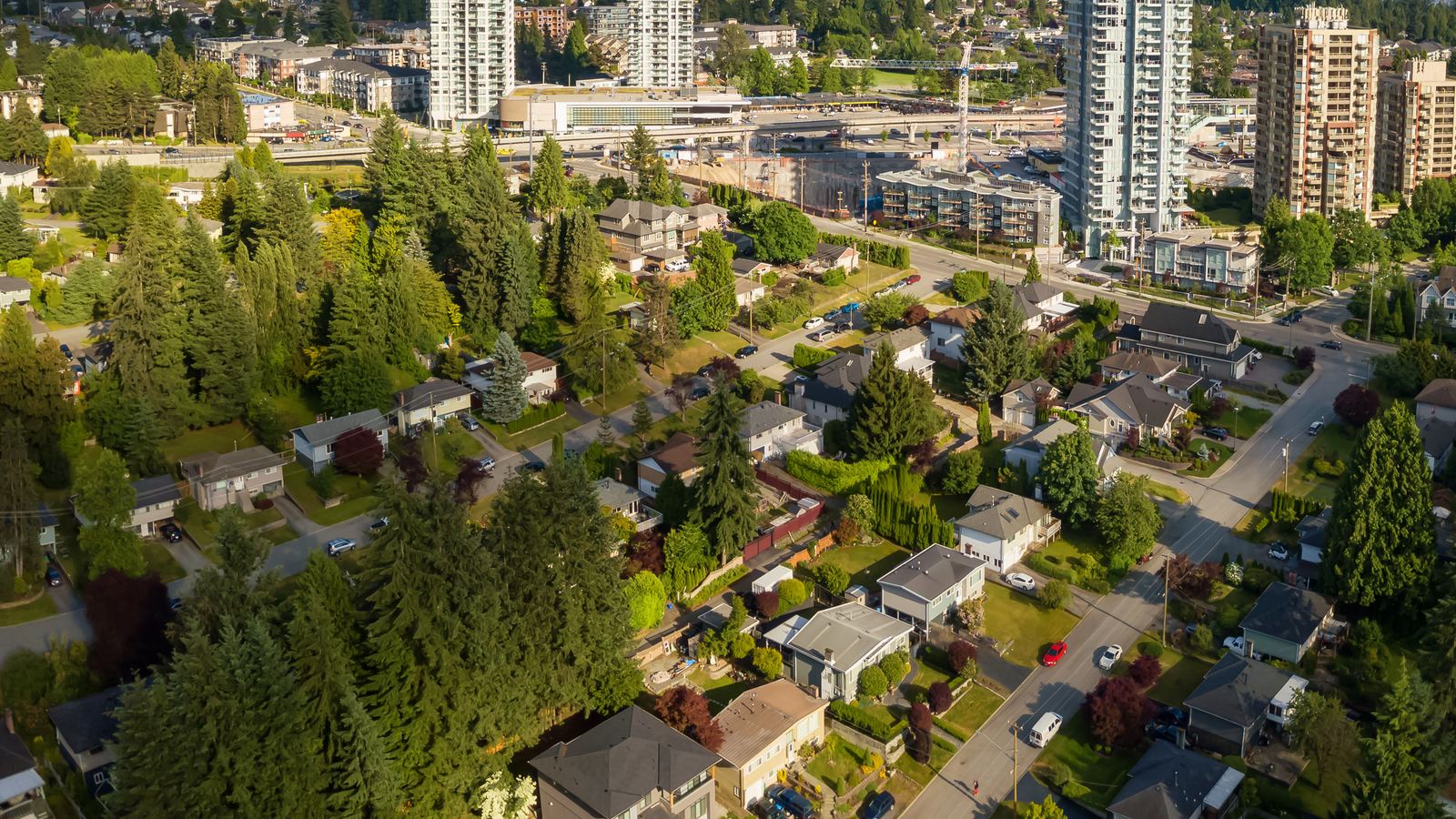
Until recently, a Port Moody lot had one value: what a family would pay to live in the house on it. Since the SSMUH rules took effect, many lots quietly carry a second value: what the land is worth to someone who can build four homes on it. Sometimes the two numbers sit close together. Sometimes they do not, and owners deserve to know which situation is theirs.
Why the rules changed the math
Land value follows what land can do. When Port Moody's zoning began permitting up to four homes on most single-family lots, and up to six near frequent transit, the ceiling on many properties moved. The house is worth what it always was; the land under it gained possibilities, and possibilities have prices. This is the same logic that long gave corner lots and lane access their premiums, applied suddenly and city-wide.
Who pays for multiplex potential
The buyer pool for a well-located lot now includes small builders seeking their next fourplex site, investors planning to build and hold rentals, and multi-generational families wanting several homes on one property, alongside the ordinary families who simply want the house. These buyers value the property differently. A builder's offer prices the zoning tier, the lot's dimensions, its trees and grade, and its distance to a bus stop, which is why two similar-looking houses on one street can carry different land values.
How builders actually price land
There is no mystery, just arithmetic run backwards. A builder starts with what the finished homes would sell for, then subtracts construction costs, soft costs such as design and permits, financing, and margin. What remains is what the land is worth to that builder. Planners call it residual land value.
Anything that raises the cost side, a slope, a servicing upgrade, a tree-driven redesign, comes directly off the land offer. Identical zoning does not mean identical offers, and the difference is visible in the lot data before any negotiation.
The mistake runs in both directions
Some owners assume the multiplex premium applies automatically and anchor on a number their lot cannot support. Others dismiss it entirely and sell a genuine four-home site at house-only pricing, leaving the land value for the next owner to collect. Both mistakes have the same cure: a lot-specific read before any decision, in either direction.
One caution on public numbers: BC Assessment reflects market value for taxation and can incorporate development potential over time, but an assessment is not a builder's offer. The two are calculated differently and can diverge widely on exactly the lots where SSMUH matters most.
Learning the number without listing anything
An owner does not need to sell, or want to sell, to understand what they hold. A proper read takes the address, checks the zoning tier, the physical and servicing realities, and the title, and frames both values: home and site. A feasibility study does this at no cost and with no listing agreement attached. Some owners act on the answer. Many simply file it away, which is a perfectly good outcome. The related question of what to do next is covered in sell, build, or stay.
Common questions
How much more is a multiplex-eligible lot worth?
There is no honest single number. The premium depends on the unit ceiling, buildability, servicing, title, and current construction economics. Some lots carry a meaningful development premium and others little to none, which is why a lot-specific read matters more than any rule of thumb.
Do property taxes rise because a lot has multiplex potential?
BC Assessment values property at market value, which can reflect development potential over time as sales in the area prove it out. The zoning change itself created no special tax. Any assessment movement follows market evidence, as it always has.
What is an off-market sale and why do builders use them?
An off-market sale happens privately, without a public listing. Builders often prefer moving early and quietly on sites that fit their model. For an owner who knows their lot's development value, a private conversation can surface a land-value offer without signs, staging, or open houses.
Can an owner learn their lot's value without listing the house?
Yes. A feasibility study reads the zoning tier, lot conditions, servicing picture, and title questions, and frames what they mean for value, privately and without obligation. What the owner does with the number, including nothing, is entirely their choice.